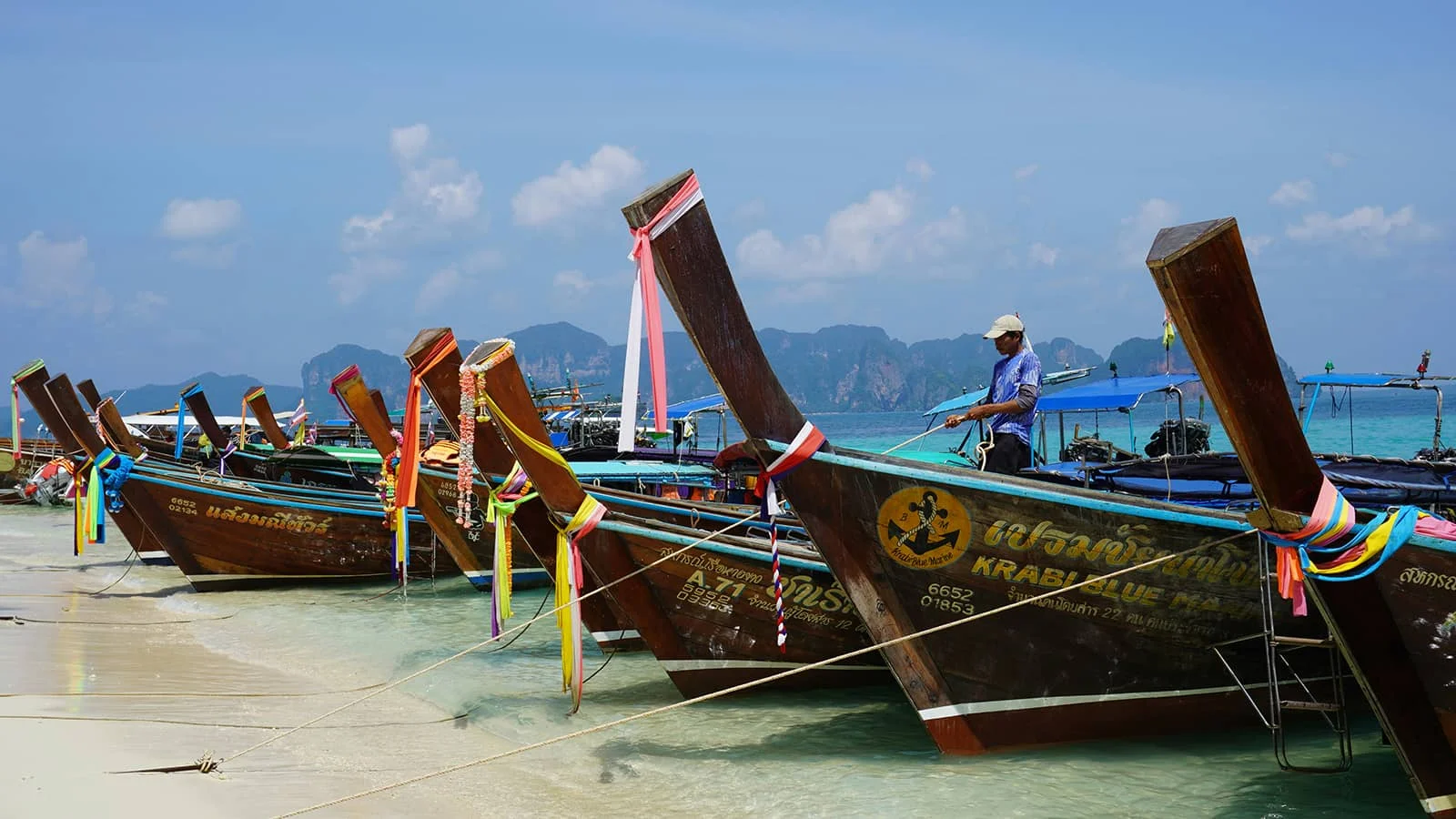
Asia is too large and varied for one destination to be “best” for everyone.
A traveler looking for mountain trails and cool mornings in Nepal is planning a completely different trip from someone who wants island-hopping in the Philippines, temples and food in Japan, or a longer tropical stay in Bali.
That is why choosing between travel destinations in Asia is easier when you start with the experience you want rather than a list of famous cities.
This guide focuses on destinations that give you a clear reason to go. Some work best for outdoor adventures. Others make sense for food, history, islands, first-time travel or a longer stay where you may need to work along the way.
If you are still deciding between specific cities for a longer trip, use our Compare Locations tool to look at practical differences such as living costs, internet, climate and entry requirements.
Travel Destinations in Asia at a Glance
| If You Want… | Start With… | Why Go |
|---|---|---|
| Mountains and serious trekking | Nepal | Himalayan trails and mountain landscapes |
| Islands and dramatic coastlines | Palawan, Philippines | Lagoons, limestone cliffs and island-hopping |
| Food + city exploration | Tokyo, Japan | Neighborhoods, food and easy transport |
| Tropical outdoor adventure | Bali, Indonesia | Coast, waterfalls, rice landscapes and volcano trips |
| Nature without giving up city life | Chiang Mai, Thailand | Mountains and national parks close to the city |
| Culture + outdoor exploration | Northern Vietnam | Mountains, valleys and distinctive local cultures |
| Wildlife and rainforest | Malaysian Borneo | Rainforest, wildlife and national parks |
| Temples + active travel | Yogyakarta, Indonesia | Volcano trips plus major historical sites |
| High-altitude scenery | Ladakh, India | Mountain roads, valleys and stark landscapes |
| A compact first Asian trip | Singapore | Easy transport, food and accessible nature |
The right choice depends less on which destination is most famous and more on how you want to spend your days.
1. Nepal: One of the Best Travel Destinations in Asia for Mountain Adventures

Nepal belongs near the top of the shortlist when the mountains themselves are the reason for traveling.
The country gives you access to the Himalayas at very different levels of difficulty. You do not have to attempt Everest Base Camp or spend weeks trekking to experience the landscape. Shorter routes, day hikes and mountain towns make Nepal workable for travelers with less time as well.
Sagarmatha National Park, home to Mount Everest and several other major Himalayan peaks, is a UNESCO World Heritage Site. UNESCO World Heritage Centre
Choose Nepal if: trekking, mountain scenery and active days are central to your trip.
Think twice if: you want a low-effort holiday built around beaches, nightlife or resort facilities.
How Much Time Should You Give Nepal?
A quick Kathmandu visit does not really deliver what makes Nepal distinctive.
If trekking is important, build the trip around the route first and fit Kathmandu and other stops around it. Altitude, weather and transport can all make an overpacked itinerary frustrating.
For a less demanding trip, Kathmandu, Pokhara and shorter hikes can still give you a good mix of culture and mountain scenery.
2. Palawan, Philippines: For Island-Hopping Rather Than One Resort Beach

Palawan makes more sense for travelers who want to explore the coast, not simply stay beside it.
Around El Nido and Coron, days can revolve around boat trips, limestone formations, lagoons, snorkeling and beaches that are reached from the water.
That distinction matters. If your idea of a beach holiday is unpacking once and spending every afternoon on the same stretch of sand, another destination may be easier.
Choose Palawan if: island-hopping, snorkeling and coastal scenery are priorities.
Think twice if: repeated boat transfers and changing accommodation sound more tiring than exciting.
If the beach itself matters more than island-hopping, our guide to the best beaches in Asia compares beaches by snorkeling, scenery, accessibility and trip style rather than simply ranking them by appearance. Nomad Work Guide
3. Tokyo, Japan: Best When You Want the City to Be the Adventure

Outdoor adventure does not always mean hiking boots and remote mountains.
Tokyo works because walking through the city can become the day itself.
Instead of rushing between famous attractions, choose a few neighborhoods and explore them properly. Markets, small restaurants, parks, shopping streets, shrines and train rides create a trip where you are constantly moving without needing an organized outdoor excursion every morning.
Japan also gives you an easy way to combine Tokyo with historical and natural destinations elsewhere in the country. UNESCO currently lists 27 World Heritage properties in Japan, including cultural and natural sites. UNESCO World Heritage Centre
Choose Tokyo if: food, neighborhoods and urban exploration matter as much as conventional sightseeing.
Think twice if: your main goal is solitude or tropical nature.
Is Tokyo Good for a First Trip to Asia?
It can be, especially if transport convenience matters.
But Tokyo is not a shortcut to understanding all of Asia. It is a very specific travel experience, and that is exactly why it works better when chosen for what it actually offers rather than as a generic “Asia starter destination.”
4. Bali, Indonesia: Best for Mixing Outdoor Days With a Longer Stay

Bali becomes much more interesting once you stop treating it as one beach destination.
Southern Bali, Ubud, the central highlands and the quieter parts of the island can feel remarkably different from one another.
A trip can include coastal walks, waterfalls, rice terraces, snorkeling, temple visits and early-morning volcano excursions without requiring you to leave the island.
Bali’s Subak system and associated cultural landscape are recognized by UNESCO, reflecting the relationship between the island’s water-management system, rice terraces, temples and traditional philosophy. UNESCO World Heritage Centre
Choose Bali if: you want outdoor activities but also cafés, accommodation choice and infrastructure for a longer stay.
Think twice if: your priority is escaping tourism altogether.
For anyone considering staying beyond a normal vacation, the Digital Nomad Guide is a better starting point for researching remote work, destination choices and longer-stay practicalities. Nomad Work Guide
5. Chiang Mai, Thailand: For Nature Without Giving Up an Easy City Base

Chiang Mai solves a common travel problem: wanting outdoor experiences without moving accommodation every two days.
You can use the city as a base and spend different days exploring temples, markets, mountains and the surrounding countryside.
That makes it particularly useful for travelers who like active days but still want restaurants, cafés and a comfortable place to return to in the evening.
Choose Chiang Mai if: you want a slower base with access to nature.
Think twice if: beaches are essential to your trip.
The city also makes more sense for longer stays than destinations where every outdoor experience requires another flight, ferry or hotel change.
6. Northern Vietnam: One of the Top Travel Destinations in Asia for Landscapes

Vietnam changes dramatically as you travel north from Hanoi.
Mountain roads, limestone formations, valleys and terraced landscapes create a completely different experience from the country’s major coastal cities.
Ha Giang attracts travelers for its mountain routes, while areas such as Sapa appeal to those who want hiking and terraced landscapes.
The important decision is how much movement you actually enjoy.
Trying to combine Hanoi, Ha Giang, Sapa, Ha Long Bay and central Vietnam in a short trip can turn an adventurous itinerary into a transport marathon.
Choose Northern Vietnam if: dramatic landscapes and overland exploration are more important than resort comfort.
Think twice if: you dislike long road journeys or frequent changes of base.
If your trip will also include the coast, our guide to the best beaches in Vietnam can help you decide where beach time fits into a wider Vietnam itinerary.
7. Malaysian Borneo: Best for Rainforest and Wildlife

Malaysian Borneo is a stronger choice when wildlife is the purpose of the trip rather than an activity squeezed between city sightseeing.
Sabah and Sarawak offer access to rainforests, national parks, caves, rivers and wildlife experiences that feel fundamentally different from a typical Southeast Asian city-and-beach itinerary.
This is also a destination where responsible planning matters.
Wildlife encounters are not guaranteed, distances can be significant, and some of the experiences worth traveling for require guides, permits or advance arrangements.
Choose Malaysian Borneo if: rainforest, wildlife and nature are your main reasons for traveling.
Think twice if: you want spontaneous city travel with minimal advance planning.
8. Yogyakarta, Indonesia: Best for Combining History With Active Days

Yogyakarta works particularly well when you do not want to choose between cultural sightseeing and outdoor exploration.
Borobudur and Prambanan give the region serious historical weight, while the wider area opens up opportunities for volcano-related excursions and countryside trips.
UNESCO lists both Borobudur Temple Compounds and Prambanan Temple Compounds among Indonesia’s World Heritage properties. UNESCO World Heritage Centre
Choose Yogyakarta if: temples, local culture and active day trips all matter.
Think twice if: you mainly want an island or beach holiday.
If ancient places are driving your itinerary, our guide to historical sites in Asia goes deeper into destinations where history itself is the reason to visit. Nomad Work Guide.
9. Ladakh, India: For High-Altitude Landscapes and Road Trips

Ladakh does not offer the effortless version of travel.
That is part of its appeal.
High-altitude valleys, mountain roads, monasteries and stark landscapes make the journey itself a major part of the experience.
But altitude changes the way you should plan. Arriving and immediately filling every day with demanding activity is not sensible. A realistic itinerary needs room for acclimatization and slower days.
Choose Ladakh if: mountain scenery, road journeys and unusual landscapes are worth extra planning.
Think twice if: you need a highly flexible itinerary or struggle with altitude.
This is a destination where adding more stops does not necessarily improve the trip. Extra time can be more valuable than an extra destination.
10. Singapore: Best for an Easy First Step Into Asia

Singapore is the outlier on this list, and that is useful.
You do not need a rugged itinerary to spend substantial time outdoors. Gardens, waterfront areas, walking routes and nature reserves can be combined with neighborhoods, food and city sightseeing without complicated logistics.
Its compact size also makes it easier to correct a bad itinerary decision. If you spend longer somewhere than expected, you are unlikely to lose half a day moving between distant parts of the country.
Choose Singapore if: you want an easy, compact trip with food, city experiences and accessible outdoor time.
Think twice if: wilderness or low-cost long-term travel is the main objective.
Which Travel Destinations in Asia Are Best for Your Trip?
Do not start by asking which Asian destination is “number one.”
Start with what you would be disappointed to miss.
If mountains are non-negotiable, Nepal or Ladakh should move up your list.
If you want to spend most days around water, Palawan makes more sense.
If food and city exploration are the trip, Tokyo deserves more attention.
If you want outdoor experiences while keeping one comfortable base, Bali or Chiang Mai can be easier.
For rainforest and wildlife, Malaysian Borneo offers something the city-focused destinations cannot reproduce.
And if you want culture and outdoor day trips together, Yogyakarta gives you a particularly useful balance.
That is a much more reliable way to compare Asia travel destinations than trying to find one place that supposedly does everything best.
Which Asia Travel Destinations Are Best for First-Time Visitors?
First-time travel does not automatically mean you need the easiest possible destination.
It means you should understand how much logistical complexity you actually want.
For the easiest city trip: Singapore.
For food and urban exploration: Tokyo.
For a mix of culture, nature and longer-stay infrastructure: Bali.
For mountains: Nepal, provided you plan properly for the type of trekking you want to do.
For a slower Southeast Asian base: Chiang Mai.
If Southeast Asia is your main focus, our guide to the best places to visit in Southeast Asia narrows the decision to that region instead of treating the whole continent as one travel market.
Which Travel Destinations in Asia Are Best for Outdoor Adventures?
For serious trekking, start with Nepal.
For island exploration, look at Palawan.
For rainforest and wildlife, Malaysian Borneo is the more specialized choice.
For road trips through mountain landscapes, consider Ladakh or Northern Vietnam.
Bali is better when you want outdoor activities without making adventure the entire purpose of your trip.
Yogyakarta works when you want active days but also care strongly about history and culture.
The important difference is intensity. A sunrise hike followed by a café afternoon in Bali and a multi-day Himalayan trek are both “outdoor travel,” but they require completely different preparation.
How Long Should You Spend in Asia?
There is no useful continent-wide answer.
A week can work well for Singapore plus one nearby destination.
A focused trip to Tokyo can also work within a week.
Nepal may need substantially longer if trekking is the purpose of your visit.
Palawan becomes frustrating if you try to fit several islands into too few days.
And a multi-country Southeast Asia itinerary can easily lose large chunks of time to airports, ferries and hotel changes.
Instead of counting countries, count meaningful full days.
A 14-day trip with three carefully chosen bases can feel much richer than a six-country itinerary built around checking places off a list.
How to Compare Top Travel Destinations in Asia Before Booking
Once you have narrowed the list to two or three places, compare practical details rather than looking at more inspiration photos.
Check:
- the weather during your actual travel month;
- how long it takes to reach the experiences you care about;
- whether activities need permits or advance booking;
- how much internal transport the itinerary requires;
- whether the destination works with your physical comfort level;
- and whether you need reliable internet or a practical work setup during the trip.
If you are traveling while working remotely, our Compare Locations tool lets you compare available destinations by factors including costs, internet, climate and entry/stay information. Nomad Work Guide
For visa rules, permits, park closures and entry requirements, always verify current information with the relevant government or official authority before booking.
When Is the Best Time to Visit Travel Destinations in Asia?
There is no single “best time to visit Asia.”
That advice is too broad to be useful.
Nepal’s trekking conditions, Bali’s weather, Northern Vietnam’s mountain climate and Palawan’s sea conditions do not follow one calendar.
Even within the same country, conditions can differ substantially by region.
The practical approach is to shortlist the destination first and then research the season for the specific experience you want.
A month that is comfortable for sightseeing may not provide the sea conditions you wanted for island-hopping. A cooler month may improve a city trip but make a high-altitude route considerably more demanding.
Choose the activity first. Then choose the month.
FAQs About Travel Destinations in Asia
What are the best travel destinations in Asia?
The answer depends on the trip. Nepal is particularly strong for trekking, Palawan for island-hopping, Tokyo for food and urban exploration, Bali for a mix of outdoor activities and longer stays, and Malaysian Borneo for rainforest and wildlife experiences.
Which Asia travel destinations are best for first-time visitors?
Singapore is one of the easiest destinations logistically, while Tokyo works well for travelers prioritizing food and city exploration. Bali is useful for travelers who want culture, nature and tourist infrastructure within one destination.
Where should I go in Asia for outdoor adventures?
Consider Nepal for trekking, Palawan for island-hopping, Malaysian Borneo for rainforest and wildlife, Northern Vietnam or Ladakh for mountain landscapes, and Bali for a less demanding mix of coastal and inland activities.
Which travel destinations in Asia are best for beaches?
The Philippines, Indonesia, Thailand, Vietnam and Malaysia all offer strong beach destinations, but they suit different trips. Palawan is particularly useful for island-hopping, while destinations such as Nusa Dua in Bali are easier for travelers wanting a resort-style stay. See our best beaches in Asia guide for a beach-specific comparison.
What are the best travel destinations in Asia for history?
Japan, Cambodia, Indonesia, India and China all offer major historical destinations. If history is the main purpose of your trip rather than one part of it, start with our guide to historical sites in Asia instead.
How many destinations should I visit on a two-week Asia trip?
For most travelers, two or three well-connected bases are more practical than trying to visit as many countries as possible. Flight times, airport transfers, ferries and changing hotels can consume much more of a two-week trip than a map suggests.
Final Takeaway
The most useful travel destinations in Asia are not necessarily the places appearing most often on “top 10” lists.
Nepal makes sense when mountains are the trip. Palawan works when you want to explore islands rather than stay at one resort. Tokyo is strong when food and neighborhoods matter more than conventional outdoor adventure. Bali offers a practical combination of nature and longer-stay infrastructure, while Malaysian Borneo deserves attention when rainforest and wildlife are the priority.
Start with the experience you actually want, then compare season, travel time, access and practical requirements.
That turns a huge list of travel destinations in Asia into a much smaller group of places that actually fit your trip.


